Loading...

Table of Content

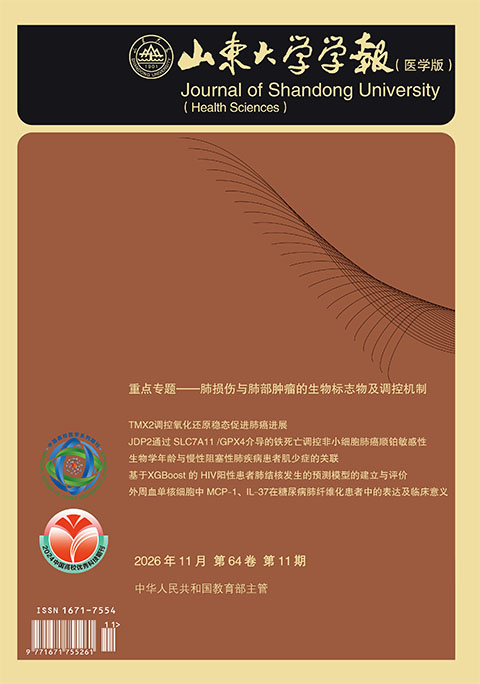
    Biomarkers and Regulatory Mechanisms of Lung Injury and Lung Tumors
    TMX2 promotes lung cancer progression via regulating redox homeostasis
    SUN Qi, LIANG Chuanjie, FENG Dan, WANG Yanan, YUAN Huiqing
    Journal of Shandong University (Health Sciences). 2026, 64(11):  1-12.  doi:10.6040/j.issn.1671-7554.0.2026.0045
    Abstract ( 16 )   PDF (12648KB) ( 38 )   Save
    References | Related Articles | Metrics
    Objective To investigate the expression patterns, clinical significance, and regulatory role of TMX2-a member of the protein disulfide isomerase(PDI)family-in lung cancer, particularly its influence on the redox homeostasis of cancer cells. Methods qRT-PCR and immunohistochemistry were used to analyze the expressions of TMX2 and related PDI members in lung cancer tissues and cell lines; the GEPIA database was used to analyze survival prognosis; siRNA knockdown combined with MTT assays and flow cytometry was employed to assess the effects of TMX2 on lung cancer cell proliferation, ROS levels, and the GSH/GSSG ratio; and ELISA was used to measure clinical serum TMX2 levels. Results PDIA3, PDIA6, TMX1, and TMX2 were significantly overexpressed in lung cancer. High TMX2 expression was positively correlated with poor patient prognosis. Knocking down TMX2 led to a decrease in the GSH/GSSG ratio in lung cancer cells, a significant increase in intracellular ROS levels, and inhibition of cell proliferation. Clinical data indicated that serum TMX2 levels in lung cancer patients were significantly higher than those in healthy controls and were positively correlated with lung cancer progression. Conclusion TMX2 is a key upregulated redox regulator in lung cancer that promotes lung cancer cell proliferation by maintaining the homeostasis of the intracellular GSH system. TMX2 is a potential diagnostic biomarker and therapeutic target for lung cancer.
    JDP2 regulates cisplatin sensitivity in non-small cell lung cancer via SLC7A11/GPX4-mediated ferroptosis
    QIAN Weishi, ZHAO Feixue, QI He, YU Zaixin, CHU Yanbiao
    Journal of Shandong University (Health Sciences). 2026, 64(11):  13-21.  doi:10.6040/j.issn.1671-7554.0.2026.0151
    Abstract ( 17 )   PDF (6028KB) ( 41 )   Save
    References | Related Articles | Metrics
    Objective To investigate the role of the transcription factor Jun dimerization protein 2(JDP2)in the context of cisplatin(CDDP)resistance in non-small cell lung cancer(NSCLC), with a particular focus on its mechanism related to ferroptosis. Methods The expression, function, and clinical significance of JDP2 in the cisplatin-resistant NSCLC cell line A549/CDDP were evaluated using a range of methods. These included CCK-8 assays, Western blotting analysis, qPCR, Transwell migration assays, wound healing assays, and bioinformatics analysis. In order to explore the potential role of JDP2 in ferroptosis, JDP2 was knocked down using RNA interference and combined with the ferroptosis inducer RSL3. The analysis focused on the content of intracellular reactive oxygen species(ROS), malondialdehyde(MDA), and the protein expression of GPX4 and SLC7A11. Results A549/CDDP cells exhibited significant cisplatin resistance, and JDP2 expression levels were significantly downregulated. Patients diagnosed with NSCLC who exhibited high JDP2 expression were observed to demonstrate a more favourable prognosis. The knockdown of JDP2 resulted in the promotion of migration and invasion of A549/CDDP cells, as well as the upregulation of GPX4 and SLC7A11 expression. RSL3 effectively induced ferroptosis(as indicated by increased ROS and MDA, and decreased GPX4 and SLC7A11), while JDP2 knockdown partially reversed these RSL3-induced ferroptosis-related phenotypes. Conclusion JDP2 has been identified as a potential tumour suppressor in NSCLC, and its expression loss has been linked to cisplatin resistance. The loss of JDP2 expression has been hypothesised to lead to cisplatin resistance by reducing cellular ferroptosis sensitivity(involving the SLC7A11/GPX4 axis), suggesting JDP2 as a new potential target for overcoming cisplatin resistance in NSCLC.
    Association between biological age and sarcopenia in patients with chronic obstructive pulmonary disease
    LI Shuchang, CHANG Yuan, ZHANG Shanshan, JIANG Yuanyuan
    Journal of Shandong University (Health Sciences). 2026, 64(11):  22-28.  doi:10.6040/j.issn.1671-7554.0.2026.0357
    Abstract ( 19 )   PDF (1259KB) ( 28 )   Save
    References | Related Articles | Metrics
    Objective To explore the cross-sectional association between biological age and chronic obstructive pulmonary disease(COPD)combined with sarcopenia and its dose-response relationship using data from the China Health and Retirement Longitudinal Study(CHARLS)2015. Methods This study included 4,204 participants(39 in the comorbidity group and 4,165 in the non-comorbidity group). Three hierarchical logistic regression models were constructed, progressively adjusting for demographic characteristics, BMI, and chronic diseases as confounders. Restricted cubic spline(RCS)was used to assess nonlinear associations, segmented regression was employed to identify the inflection point(threshold W), and likelihood ratio test was utilized to compare the goodness-of-fit between the segmented model and the single-slope model. Univariate subgroup generalized linear model(GLM)analysis was used to evaluate the consistency of effects and interactions across major subgroups. Results After adjusting for confounders, biological age was significantly positively associated with COPD combined with sarcopenia(OR=2.52, 95%CI: 1.78-3.61, P<0.001), with a clear positive association as biological age tertiles increased(P<0.001). RCS analysis showed that the association was primarily linear within the observed range(Pnonlinearity=0.141). Segmented regression identified a biological age threshold at 60.26: below this threshold, risk increased significantly with biological age(OR=1.35, P=0.002); above this threshold, the association was not significant(P=0.076). Likelihood ratio test showed that the segmented model was superior to the linear model(P=0.016). Subgroup analysis showed generally consistent effects across major populations. Conclusion Higher biological age is independently associated with increased risk of COPD combined with sarcopenia, with a biological age threshold of approximately 60.26, below which the association is more significant. Accelerated biological aging may be a key driver of this comorbidity.
    Establishment and evaluation of a prediction model for tuberculosis occurrence in HIV-positive patients based on XGBoost
    ZHOU Lu, LI Qiujing, LI Haiwen, ZHAO Jun, DAI Jingyi
    Journal of Shandong University (Health Sciences). 2026, 64(11):  29-39.  doi:10.6040/j.issn.1671-7554.0.2025.0473
    Abstract ( 19 )   PDF (4987KB) ( 28 )   Save
    References | Related Articles | Metrics
    Objective To predict the risk of tuberculosis in HIV-positive patients using machine learning models. Methods Clinical data of 937 HIV-positive patients with pulmonary infections hospitalized at Kunming Third Peoples Hospital from April 2020 to December 2024 were retrospectively analyzed. A total of 56 clinical variables were included. Feature variables were selected using LASSO regression, and an XGBoost algorithm was employed to construct a predictive model. Model performance was evaluated using receiver operating characteristic(ROC)curves, calibration curves, and decision curve analysis, with sensitivity, specificity, and accuracy calculated. Additionally, the SHAP algorithm was applied to quantify and attribute the importance of each feature. Results Among the 937 study subjects, 258 were diagnosed with pulmonary tuberculosis and 679 with non-tuberculous pulmonary infections, resulting in an overall tuberculosis prevalence of 27.5%. LASSO regression identified 9 key feature variables, including lymphocyte count, lymphocyte percentage, hemoglobin, urea, erythrocyte sedimentation rate, partial thromboplastin time, high-sensitivity C-reactive protein, age, and history of alcohol consumption. The XGBoost prediction model constructed based on these 9 variables achieved area under the curve(AUC)values of 0.862(0.836-0.889)in the training set and 0.702(0.616-0.788)in the test set. Combined with the SHAP analysis, a longer partial thromboplastin time, higher levels of hypersensitive C-reactive protein and erythrocyte sedimentation rate, as well as a history of alcohol consumption, were associated with a higher likelihood of developing pulmonary tuberculosis. Additionally, middle-aged population, lower urea level, decreased hemoglobin, and lower lymphocyte count and percentage were also identified as risk factors warranting vigilance for the occurrence of pulmonary tuberculosis. Conclusion The XGBoost-based model for predicting pulmonary tuberculosis in HIV-positive patients demonstrates good predictive performance and can effectively identify high-risk individuals and related risk factors, providing a scientific basis for early intervention.
    Expression and clinical significance of MCP-1 and IL-37 in peripheral blood mononuclear cells in patients with diabetic pulmonary fibrosis
    TIAN Linjuan, HU Weidong, WANG Xiaojun, WANG Dong, ZHOU Zhihe
    Journal of Shandong University (Health Sciences). 2026, 64(11):  40-47.  doi:10.6040/j.issn.1671-7554.0.2024.1254
    Abstract ( 21 )   PDF (1632KB) ( 31 )   Save
    References | Related Articles | Metrics
    Objective To investigate the expression and clinical significance of monocyte chemoattractant protein-1(MCP-1)and interleukin-37(IL-37)in peripheral blood monocytes of patients with diabetic pulmonary fibrosis. Methods A total of 46 patients diagnosed with type 2 diabetes mellitus(T2DM)complicated by pulmonary fibrosis at the Affiliated Hospital of Gansu University of Chinese Medicine between June and December 2022 were enrolled as the study group, while other 46 patients diagnosed solely with T2DM during the same period served as the control group.The differences in inflammatory cytokine(MCP-1 and IL-37)levels in peripheral blood mononuclear cells were compared between the two groups. The diagnostic value of MCP-1 and IL-37 levels in predicting pulmonary fibrosis development was evaluated using ROC curve analysis. Based on the median values of MCP-1 and IL-37, the 46 T2DM patients with pulmonary fibrosis were categorized into the high MCP-1 level group(H-MCP-1 group), low MCP-1 level group(L-MCP-1 group), high IL-37 level group(H-IL-37 group), and low IL-37 level group(L-IL-37 group).Comparative analyses were conducted on baseline characteristics, glycemic parameters(FPG, HbA1c, FINS, HOMA-IR), pulmonary ventilation function(FVC%, FEV1%, DLCO%, SpO2),6-month rehospitalization rates, and mortality due to respiratory failure between the high-and low-level groups for both cytokines. The diagnostic value of MCP-1 and IL-37 levels in predicting 6-month mortality in T2DM patients with pulmonary fibrosis was further assessed via ROC curve analysis. Results Compared with the control group, the study group exhibited significantly elevated MCP-1 levels and reduced IL-37 levels(P<0.05). The combined prediction of MCP-1 and IL-37 demonstrated high diagnostic value for pulmonary fibrosis in diabetic patients(P<0.05). Compared with the L-MCP-1 group, the H-MCP-1 group showed significantly elevated SBP, DBP, FPG, FINS, HbA1c, and HOM-R, while FEV1%, FVC%, DLCO%, and SpO2 percentages were significantly decreased(P<0.05). In contrast, the H-IL-37 group exhibited significantly lower SBP, DBP, FPG, FINS, HbA1c, and HOM-R, along with significantly higher FEV1%, FVC%, DLCO%, and SpO2 percentages(P<0.05). Both the H-MCP-1 and L-IL-37 groups demonstrated significantly increased rates of rehospitalization and mortality within six months(P<0.05). The combined prediction of MCP-1 and IL-37 showed high diagnostic value for predicting six-month mortality in diabetic patients with pulmonary fibrosis(P<0.05). Conclusion In patients with diabetic pulmonary fibrosis, the expression of MCP-1 in peripheral blood mononuclear cells is elevated, while the expression of IL-37 is reduced. Both markers are closely associated with the patients glycemic control level, pulmonary ventilation function, and clinical prognosis. Although their diagnostic efficacy remains moderate, the combined detection of MCP-1 and IL-37 provides potential hematological indicators for the early identification and risk assessment of diabetic pulmonary fibrosis.
    Clinical Medicine
    Consistency between planned and postoperative measured angles in Mako robot-assisted total knee arthroplasty and its impact on coronal plane alignment of the knee classification
    BIAN Tao, LI Lei, WANG Zhaolun, YANG Dejin, ZHOU Yixin
    Journal of Shandong University (Health Sciences). 2026, 64(11):  48-55.  doi:10.6040/j.issn.1671-7554.0.2026.0498
    Abstract ( 21 )   PDF (1419KB) ( 17 )   Save
    References | Related Articles | Metrics
    Objective To investigate the consistency between intraoperative planned angles based on three-dimensional computed tomography(CT)modeling and postoperative measured angles based on two-dimensional long-leg radiographs in Mako robot-assisted total knee arthroplasty(TKA), and to quantitatively evaluate the impact of any discre-pancies on the Coronal Plane Alignment of the Knee(CPAK)classification. Methods A retrospective analysis was conducted on 194 patients(212 knees)who underwent primary Mako robot-assisted TKA between June and December 2024. Intraoperative planned medial proximal tibial angle(MPTA)and lateral distal femoral angle(LDFA)were directly extracted from the robotic system. Postoperative long-leg radiographs were independently measured by two blinded observers to obtain corresponding angles. The arithmetic hip-knee-ankle angle(aHKA)and joint line obliquity(JLO)were calculated, and CPAK classification was performed. Paired t-tests, Bland-Altman analysis, and Cohens Kappa coefficient were used to compare the agreement of angle measurements and classification between the two methods. Results Postoperative radiographic MPTA was significantly larger(more valgus)than the intraoperative CT-planned value, with a mean difference of 0.70°(95%CI: 0.52° to 0.88°, P<0.001), while no significant difference was observed for LDFA(P=0.154), resulting in a more neutral postoperative aHKA compared to the planned value(mean difference: 0.82°, P<0.001). Bland-Altman analysis revealed wide 95% limits of agreement for MPTA(-1.90° to 3.31°). Correlation between measurements from the two methods was moderate across all angular parameters(ICC range: 0.452 to 0.561). The overall agreement rate for CPAK classification was 53.8%, with a Kappa value of 0.310(fair agreement). The predominant reclassification pathway was from intraoperative planned "type IV" to postoperative measured "type V"(38 knees, accounting for 38.8% of all discordant knees). Conclusion In Mako robot-assisted TKA, postoperative radiographic measurements demonstrate a systematic valgus offset compared to intraoperative CT-based planning, primarily manifested in MPTA, leading to altered CPAK classification in nearly half of the patients. Surgeons should be aware of differences between imaging modalities when pursuing CPAK-guided personalized alignment targets.
    Clinical diagnosis and treatment analysis of cemento-ossifying fibroma
    LIU Xianguang, LI Chenglong, LI Tao
    Journal of Shandong University (Health Sciences). 2026, 64(11):  56-63.  doi:10.6040/j.issn.1671-7554.0.2025.0381
    Abstract ( 21 )   PDF (3257KB) ( 38 )   Save
    References | Related Articles | Metrics
    Objective To discuss the clinical diagnosis and treatment characteristics, imaging features, treatment options, and prognosis of cemento-ossifying fibroma, and to deepen our understanding of this disease and provide references for clinical diagnosis and treatment by reviewing relevant literature. Methods A retrospective study was conducted by collecting the case records of 14 patients with cemento-ossifying fibroma who underwent surgical treatment and were confirmed pathologically in the Department of Oral and Maxillofacial Surgery in Stomatological Hospital Shandong University between July 2017 and December 2024. The demographic data, clinical presentations, radiographic features, treatment, and follow-up data were analyzed, and the findings in conjunction with domestic and international literature were summarized. Results Among the fourteen patients with cemento-ossifying fibroma, 3 were male and 11 were female, with a male-to-female ratio of 1∶3.67. Their ages ranged from 12 to 70 years, with an average age of 39.2 years. Twelve cases(85.7%)occurred in the mandible, and two cases(14.3%)occurred in the maxilla. Twelve patients(85.7%)had varying degrees of bone protrusion in the lesion area, and six patients(42.9%)had initial symptoms of swelling and pain. In terms of imaging, thirteen cases(92.9%)had clear lesion boundaries, while one case(7.1%)had unclear lesion boundaries; thirteen cases(92.9%)contained varying degrees of high-density shadows, while one case(7.1%)had completely low-density imaging within the lesion. Eleven patients(78.6%)underwent mandibular tumor resection, and three patients(21.4%)had lesions located in the anterior part of the mandible with a large range. A mandibular block resection was performed while preserving the lower edge of the jawbone, and iliac bone reconstruction was performed. Following up for 0.5-7 years after surgery, no recurrence of the disease occured. Conclusion Cemento-ossifying fibroma is a common benign fibrous bone lesion in the jaw, representing the most common subtype of ossifying fibroma. It is more prevalent in females and tends to occur in the mandible. In early stages, it often presents no symptoms, with bony expansion being the most common clinical manifestation. Surgical removal of the lesion is an effective treatment method. For patients with early-stage lesions that are small in scope or have clear boundaries, curettage of the lesion may be feasible. For tumors with unclear boundaries or invasive manifestations, extended resection of the lesion is recommended, and bone grafting may be necessary to reconstruct the morphology and function of the jaw. Early diagnosis, complete resection, and long-term postoperative follow-up are crucial in preventing postoperative recurrence of cemento-ossifying fibroma.
    Comparison of cerebrospinal fluid chitinase-3-like protein 1 levels in patients with myelin oligodendrocyte glycoprotein antibody-associated disease and neuromyelitis optica spectrum disorder
    XIA Ruihong, WANG Yunfeng, WANG Shengjun
    Journal of Shandong University (Health Sciences). 2026, 64(11):  64-70.  doi:10.6040/j.issn.1671-7554.0.2026.0218
    Abstract ( 14 )   PDF (942KB) ( 35 )   Save
    References | Related Articles | Metrics
    Objective To measure and compare cerebrospinal fluid and serum levels of chitinase-3-like protein 1(CHI3L1/YKL-40)among patients with myelin oligodendrocyte glycoprotein antibody-associated disease(MOGAD), patients with neuromyelitis optica spectrum disorder(NMOSD), and the non-inflammatory control group(NIC), and to investigate the associations of YKL-40 levels with disease severity and relapse. Methods A total of 59 patients admitted to Qilu Hospital of Shandong University between July 2017 and April 2022 were enrolled, including 15 men and 44 women, aged 12-68 years, with a mean age of 44.00±14.14 years. The subjects were divided into the MOGAD group(n=13), NMOSD group(n=33), and NIC group(n=13). Clinical data and auxiliary examination findings were collected. Cerebrospinal fluid and serum YKL-40 levels were measured and compared among the three groups. Receiver operating characteristic(ROC)curve analysis was used to evaluate the ability of cerebrospinal fluid and serum YKL-40 levels to distinguish the MOGAD group from the NMOSD group. Logistic regression analysis was performed to assess the associations between cerebrospinal fluid or serum YKL-40 levels and relapse within 1 year after disease onset in the MOGAD and NMOSD groups. Correlations between YKL-40 levels and hematological parameters were also analyzed. Results Compared with the NIC group, serum YKL-40 levels were increased in both the MOGAD and NMOSD groups(Z=-2.179, P=0.029; Z=-3.026, P=0.002, respectively). Cerebrospinal fluid YKL-40 levels were higher in the MOGAD group than in the NIC and NMOSD groups(Z=-2.179, P=0.029; Z=-2.123, P=0.034, respectively), whereas no statistically significant difference was observed between the NMOSD and NIC groups(Z=-0.043,P=0.965). ROC curve analysis showed that the areas under the ROC curve of cerebrospinal and serum fluid YKL-40 levels for differentiating MOGAD from NMOSD were 0.709 and 0.602, respectively. In the MOGAD group, cerebrospinal fluid YKL-40 levels were positively correlated with expanded disability status scale scores(r=0.645, P=0.017). The monocyte-to-lymphocyte ratio at disease onset was negatively correlated with serum YKL-40 levels in the MOGAD group(r=-0.678, P=0.015), while the neutrophil count at disease onset was positively correlated with serum YKL-40 levels in the NMOSD group(r=0.455, P=0.022). Conclusion Acute-phase cerebrospinal fluid YKL-40 levels may help distinguish MOGAD from NMOSD. Elevated cerebrospinal fluid YKL-40 levels are associated with greater disease severity in patients with MOGAD.
    Neonatal brain microstructural deviations predict neurodevelopmental outcomes at 2 years of age
    WANG Lifeng, LI Ruiqiu
    Journal of Shandong University (Health Sciences). 2026, 64(11):  71-80.  doi:10.6040/j.issn.1671-7554.0.2026.0099
    Abstract ( 13 )   PDF (10449KB) ( 34 )   Save
    References | Related Articles | Metrics
    Objective To investigate the standardized modeling based on neurite orientation dispersion and density imaging(NODDI), and the feasibility of using it to predict the long-term prognosis of white matter microstructural abnormalities in neonates with seemingly normal clinical imaging findings. Methods High-angular-resolution diffusion imaging(HARDI)data of 292 neonates without definite abnormal clinical imaging findings were enrolled. A Gaussian process regression model was constructed based on the typically developing group(n=239), and the individualized microstructural deviation(W-score)of the developmental delay group(n=53)was calculated. The correlations between the W-score and the scores of the Bayley Scales of Infant and Toddler Development(BSID)at 2 years of age were further analyzed. Results No significant intergroup differences were observed in conventional diffusion tensor imaging metrics. NODDI analysis revealed that the neurite density index(NDI)in the bilateral frontal subcortical white matter was significantly decreased in the developmental delay group. The W-score affected cognitive scores(β=5.139, P<0.001)and language scores(β=3.667, P<0.001)at the age of 2 years. The free water fraction(FWF)in the white matter surrounding the bilateral precentral and postcentralgyri was significantly elevated, which influenced motor scores(β=-44.575, P<0.001)and language scores(β=-53.15, P<0.001)at 2 years of age. Conclusion Combined with standardized modeling, NODDI can detect subtle white matter microstructural deviations in neonates with seemingly normal clinical imaging findings that cannot be identified by conventional imaging and DTI techniques, and it exhibits distinct anatomical-functional specificity. This approach serves as a sensitive early risk stratification tool based on biomarkers for neonatal cerebral developmental impairment, facilitating the clinical accurate screening of high-risk individuals.
    Distribution characteristics of serum vitamin A, D, E, and K1 levels in pregnant women at a hospital in Jinan City
    LIU Zhong, LIU Feng, TONG Libo
    Journal of Shandong University (Health Sciences). 2026, 64(11):  81-86.  doi:10.6040/j.issn.1671-7554.0.2025.1234
    Abstract ( 18 )   PDF (1201KB) ( 31 )   Save
    References | Related Articles | Metrics
    Objective To analyze the distribution characteristics of serum vitamin A(Vit A), vitamin D(Vit D), vitamin E(Vit E), and vitamin K1(Vit K1)levels and their related factors among pregnant women at a hospital in Jinan, and to provide a reference for nutritional assessment and clinical intervention during pregnancy. Methods A total of 501 pregnant women who attended routine antenatal care and underwent serum vitamin testing at the obstetrics Outpatient Clinic of a hospital between September 1 and September 15, 2022 were enrolled. Serum levels of Vit A, Vit D, Vit E, and Vit K1 were measured using high-performance liquid chromatography-tandem mass spectrometry. Differences in vitamin levels were compared across groups stratified by age, gestational stage, occupation, and residential area. Correlations among the vitamins were analyzed. Results The median serum levels of Vit A, Vit D, Vit E, and Vit K1 were 0.45 mg/L, 29.47 ng/mL, 12.13 mg/L, and 0.80 ng/mL, respectively. The deficiency rates of Vit A and Vit D were both 21.4%, and the excess rate of Vit A was 8.2%. The deficiency and excess rates of Vit E were 1.2% and 6.2%, respectively, while the deficiency rate of Vit K1 was 6.2%. Serum Vit D levels differed significantly among age groups, with pregnant women aged ≥35 years showing higher Vit D levels than those of younger age groups. Serum Vit E levels differed significantly among gestational-stage groups and showed an increasing trend with advancing gestation. Correlation analysis showed weak positive correlations of Vit A with Vit D and Vit E, and of Vit D with Vit E. Conclusion Serum fat-soluble vitamin levels in the pregnant women are relatively adequate; however, deficiencies in Vit A and Vit D are relatively common, and a proportion of women showes excess Vit A levels. Vitamin D levels are associated with maternal age, while vitamin E levels increase with advancing gestational age. Individualized nutritional guidance during pregnancy should be strengthened.
    Predictive value of neutrophil-to-lymphocyte ratio combined interleukin-10 for intravenous immunoglobulin resistance in Kawasaki disease
    DU Qingxia, LI Lei, GUAN Yuqiang, WEI Xiaoling, BIE Wenhui, ZHOU Weiran
    Journal of Shandong University (Health Sciences). 2026, 64(11):  87-93.  doi:10.6040/j.issn.1671-7554.0.2025.0668
    Abstract ( 19 )   PDF (1601KB) ( 25 )   Save
    References | Related Articles | Metrics
    Objective To investigate the predictive value of neutrophil-to-lymphocyte ratio(NLR)combined with interleukin-10 for intravenous immunoglobulin(IVIG)non-response in children with Kawasaki disease(KD). Methods A retrospective analysis of the clinical data of KD children hospitalized at the Childrens Hospital Affiliated to Shandong University from February 2020 to February 2025 was conducted. Patients were divided into responsive and non-responsive groups based on their reaction to IVIG therapy. Systemic inflammatory index and cytokines level were compared between the two groups. Multivariate logistic regression analysis and receiver operating characteristic(ROC)curves were used to evaluate the predictive value of these factors for IVIG non-response. Results Among the 229 KD children included in the study, 32(13.9%)exhibited IVIG non-response. Intergroup comparisons revealed statistically significant differences in fever duration before intravenous immunoglobulin, lymphocyte count, platelet count, alanine aminotransferase, total bilirubin, albumin, total cholesterol, plasma D-dimer, and serum sodium(P<0.05). Multivariate logistic regression analysis identified NLR(OR=1.422, 95%CI: 1.252-1.646, P< 0.01)and interleukin-10(IL-10)(OR=1.023, 95%CI: 1.014-1.034, P<0.01)as independent risk factors for IVIG non-response. ROC analysis revealed that the areas under the curve(AUC)for NLR and IL-10 in predicting IVIG non-response were 0.839 and 0.834, respectively. The combined prediction model achieved an AUC of 0.910, with a sensitivity of 87.5% and a specificity of 84.8%. Conclusion Elevated levels of the inflammatory markers, NLR and IL-10, have been identified as independent risk factors for IVIG non-response in KD. The combination of these makers demonstrate higher predictive value.
    Public Health and Preventive Medicine
    Analysis of nfluencing factors and direct economic burden of postoperative ileus in patients with colorectal cancer
    LIU Yunhong, HAN Yueyue, ZHANG Xue, ZHANG Wenhua, CAO Yingjuan
    Journal of Shandong University (Health Sciences). 2026, 64(11):  94-101.  doi:10.6040/j.issn.1671-7554.0.2025.1248
    Abstract ( 18 )   PDF (946KB) ( 33 )   Save
    References | Related Articles | Metrics
    Objective To explore the influencing factors of postoperative ileus(POI)in patients with colorectal cancer(CRC)and analyze its direct economic burden, thereby providing evidence for optimizing clinical intervention strategies and reducing medical costs. Methods A total of 2,463 CRC patients who underwent surgery in a tertiary hospital in 2018 and 2023 were enrolled, among whom 135(5.48%)developed POI. Data on demographic characteristics, medical information, and hospitalization costs were collected from the electronic medical record system. Independent risk factors were identified using binary logistic regression. A 1∶1 matching method was employed to pair the POI group with a control group based on identical sex, similar age(±10 years), identical cancer type, identical comorbidities, identical surgical approach, and identical admission year. The median of paired differences was used to quantify the burden of hospitalization costs and length of hospital stay attributable to POI. Results Independent influencing factors for POI included older age, colon cancer, hypertension, laparoscopic surgery, and preoperative intestinal obstruction(P<0.05), among which hypertension and laparoscopic surgery were protective factors. Patients with preoperative intestinal obstruction had a 13.718-fold higher risk of developing POI compared to those without, while patients with colon cancer had a 5.583-fold higher risk compared to those with rectal cancer. The total hospitalization cost in the POI group was 16,512.12 RMB higher than that in the control group, mainly reflected in increased costs of sanitary materials and western medicines, and the length of hospital stay was prolonged by 2.00 days(P<0.05). Compared with 2018, POI patients in 2023 had an average reduction of 11.12 days in hospital stay and 14,064.14 RMB in total hospitalization cost(P<0.05). Conclusion Independent risk factors for POI in CRC patients include older age, colon cancer, and preoperative intestinal obstruction, while protective factors include hypertension and laparoscopic surgery. Patients who developed POI had a significantly higher direct economic burden than those who did not.
    Relationship between air pollution exposure and atherogenic index of plasma in Chinese middle-aged and older populations
    ZHANG Yu, LIU Yi
    Journal of Shandong University (Health Sciences). 2026, 64(11):  102-111.  doi:10.6040/j.issn.1671-7554.0.2026.0372
    Abstract ( 14 )   PDF (2567KB) ( 26 )   Save
    References | Related Articles | Metrics
    Objective To investigate the effects of long-term air pollution exposure on the atherogenic index of plasma(AIP)and to examine the mediating role of body mass index(BMI)among middle-aged and older Chinese populations using longitudinal data from the China Health and Retirement Longitudinal Study(CHARLS), so as to elucidate the potential pathways through which air pollution affects lipid metabolism and to inform combined environmental-metabolic intervention strategies for cardiovascular disease prevention. Methods A total of 2,437 participants aged 45 years and above who completed blood tests in both the 2011 and 2015 waves of CHARLS were included. Air pollution exposure data(PM2.5、PM10、NO2、SO2、CO and O3)were obtained from the China High Air Pollution(CHAP)dataset. Multivariable linear regression models were used to assess the associations between air pollutant exposures and AIP levels. Causal mediation analysis(CMA)was applied to explore the mediating role of BMI. Results Multivariable linear regression analysis showed that, after adjusting for covariates, exposure to O3 and CO was significantly positively associated with AIP. Each standard deviation increase in O3 and CO mass concentrations was associated with a 0.013(95%CI: 0.004-0.022, P=0.006)and 0.010(95%CI: 0.001-0.020, P=0.027)increase in AIP, respectively. Causal mediation analysis revealed that BMI played a significant full mediation role in the associations between all six air pollutants and AIP(P<0.001). Specifically, BMI mediated 57.2% of the total effect of CO and 37.3% of the total effect of O3 on AIP. Conclusion Long-term exposure to air pollution significantly increases AIP levels among middle-aged and older Chinese adults, and this effect is primarily mediated by elevated BMI.
    Medical Psychology
    Influencing factors and intervention strategies of academic pressure for junior high school students based on perspective of social ecology
    LYU Juncheng, YANG Xuemin, SUN Xun, CAO Ying, LYU Mengke, CAO Linna
    Journal of Shandong University (Health Sciences). 2026, 64(11):  112-119.  doi:10.6040/j.issn.1671-7554.0.2026.0830
    Abstract ( 18 )   PDF (941KB) ( 27 )   Save
    References | Related Articles | Metrics
    Objective To investigate the current status and influencing factors of academic pressure for junior middle school students, so as to provide theoretical basis for reducing the academic pressure and promoting their mental health. Methods The research objects were selected by stratified cluster sampling method, and 582 junior middle school students from 2 middle schools in a certain city were surveyed using the Academic Stress Questionnaire for Middle School Students and a self-designed influencing factors questionnaire. Univariate and multivariate ordinal logistic regression analyses were employed to identify the main influencing factors, and the prevention and control countermeasures were proposed. Results Multivariate analysis revealed that female students with clearer learning goals, non-only child, poorer family economic status, poorer family atmosphere, inadequate sleep, greater pressure from off-campus tutoring, stronger peer competition pressure, negative teacher attitudes, and dissatisfied school life were more easy to experience the higher academic pressure. Conclusion Some junior high school students are under medium to high academic pressure, which should be given sufficient attention. Intervention measures should be taken from multiple dimensions such as individuals, families, schools, society based on the social ecological theory to reduce students academic pressure.
    Review
    Cat dander allergen Fel d 1 and allergic asthma: from mechanism understanding to precision management
    HAN Xinjun, QIU Yifan, ZHANG Jintao, DONG Liang
    Journal of Shandong University (Health Sciences). 2026, 64(11):  120-126.  doi:10.6040/j.issn.1671-7554.0.2025.0227
    Abstract ( 20 )   PDF (3454KB) ( 30 )   Save
    References | Related Articles | Metrics
    Sensitization to cat dander is an important risk factor for allergic asthma, with the major allergen Fel d 1 playing a central role in disease development and exacerbation. The pathogenesis of cat allergen-induced asthma is shaped by the complex interplay of multiple factors, including environmental exposure, genetic susceptibility, and immune responses. While existing studies have begun to elucidate the pathways by which Fel d 1 activates immune cells to drive airway inflammation, the mechanisms of novel allergen components and their cross-reactivity networks remain to be fully clarified. In clinical practice, conventional diagnostic methods lack the precision needed to distinguish sensitization to individual cat allergen components, hindering the development of personalized treatment strategies. Although emerging biologic approaches, such as cat-administered Fel-CuMV vaccination targeting Fel d 1 and the Fel d 1-blocking monoclonal antibody combination REGN1908/1909, show promise, challenges remain, including significant inter-individual variability in efficacy and the need for long-term safety validation. This review systematically summarizes the epidemiology, immune mechanisms, and advances in molecular diagnostics for cat allergen-induced asthma, and critically evaluates emerging therapeutic strategies, with the aim of providing a theoretical basis and practical direction for individualized management of this disease.


